Why operational confidence requires measurement of risk, drift, and decision readiness.
Read More
Why operational confidence requires measurement of risk, drift, and decision readiness.
Read MoreFor the CFO, the modernization decision is best framed as a cost avoidance and risk reduction strategy.
The question is not whether modernization is expensive. The question is whether non-modernization is affordable.
Read MoreWhy enterprise AI outcomes are determined by foundations, not models.
Read MoreEnterprises that attempt autonomy without observability and policy will scale risk. Enterprises that build the reliability stack deliberately will scale capability with control.
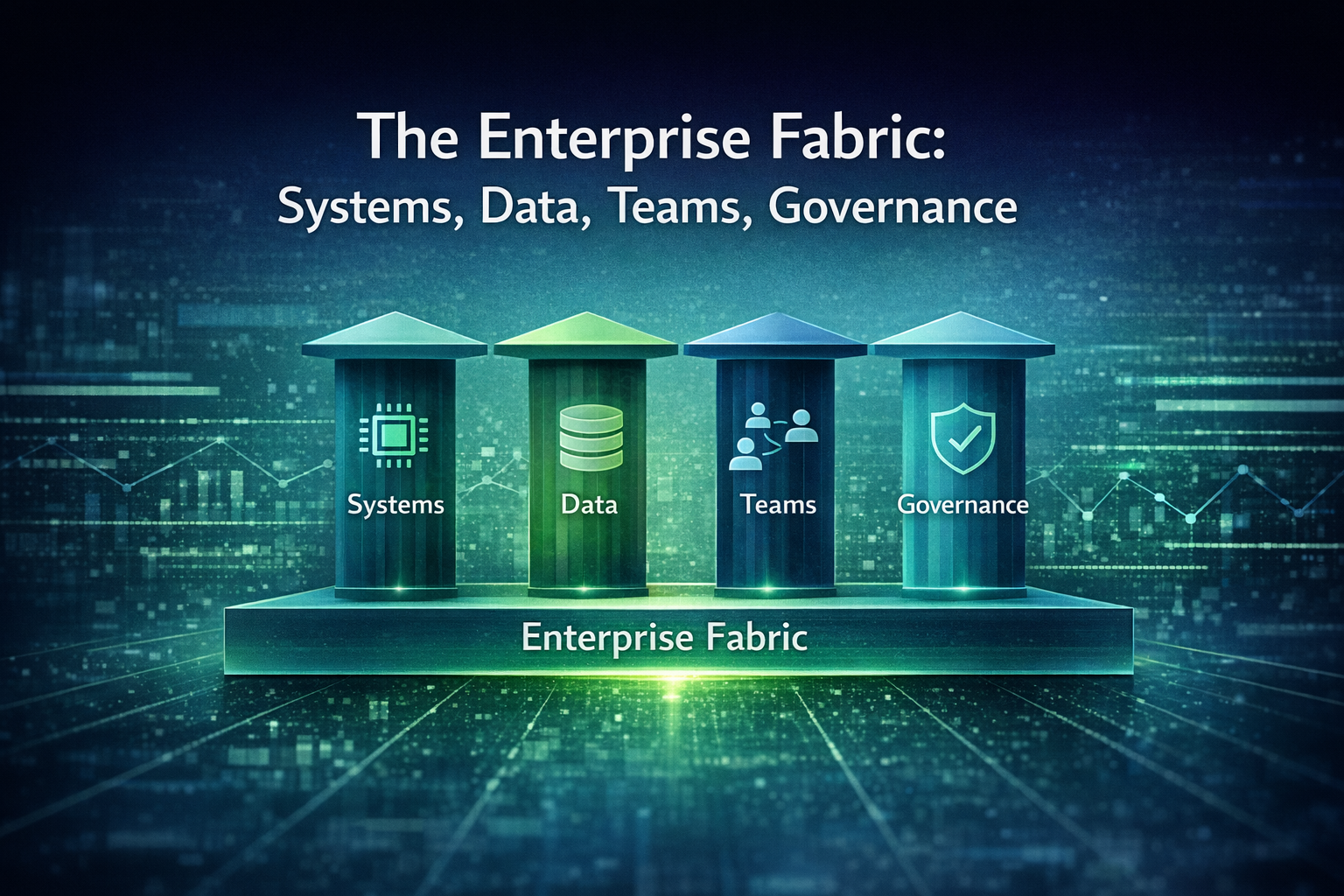
Read MoreWhy modernization succeeds only when the enterprise operates as one coherent system.
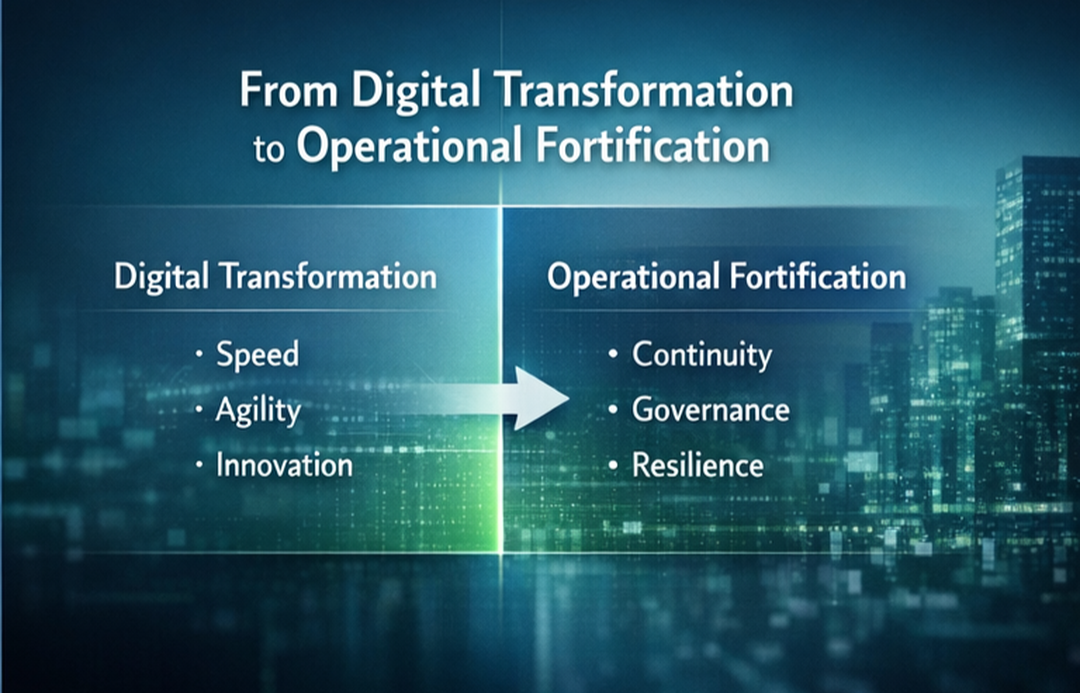
Read MoreIn 2026, modernization should be treated as enterprise risk reduction. It should strengthen continuity, improve recoverability, increase observability, and embed governance into the operational fabric.
Enterprises that modernize for speed alone may become faster and still fragile.
Enterprises that modernize for survivability become durable, governable, and ready for scale. That is the modern competitive advantage.
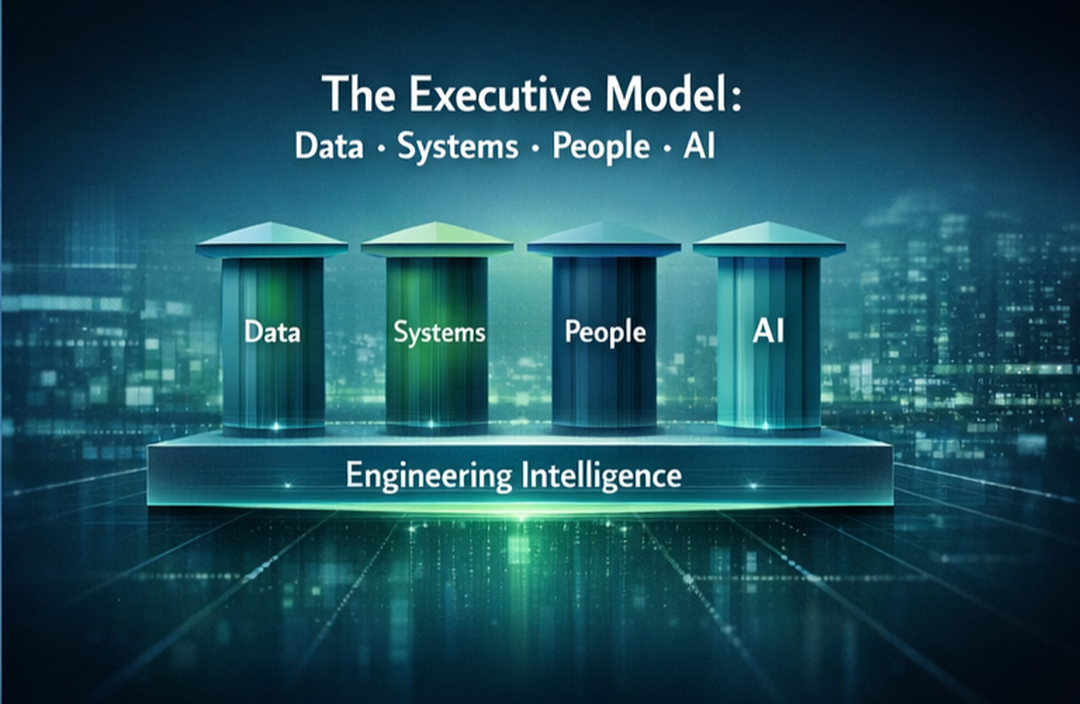
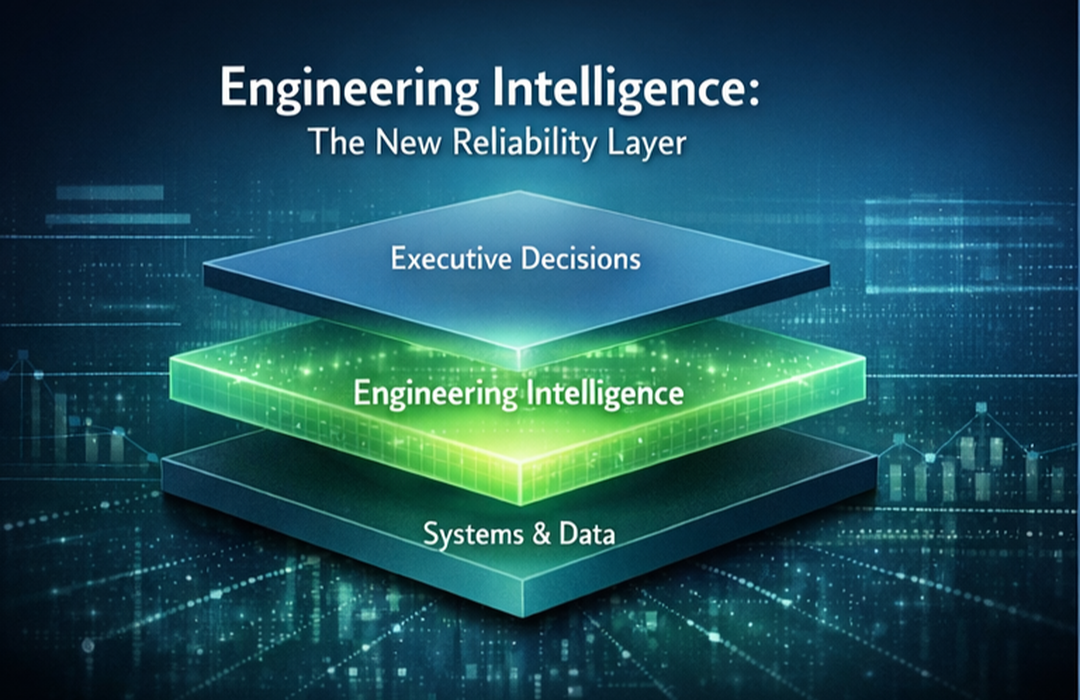
Read MoreWhy engineering intelligence is an operating model, not a technology initiative.
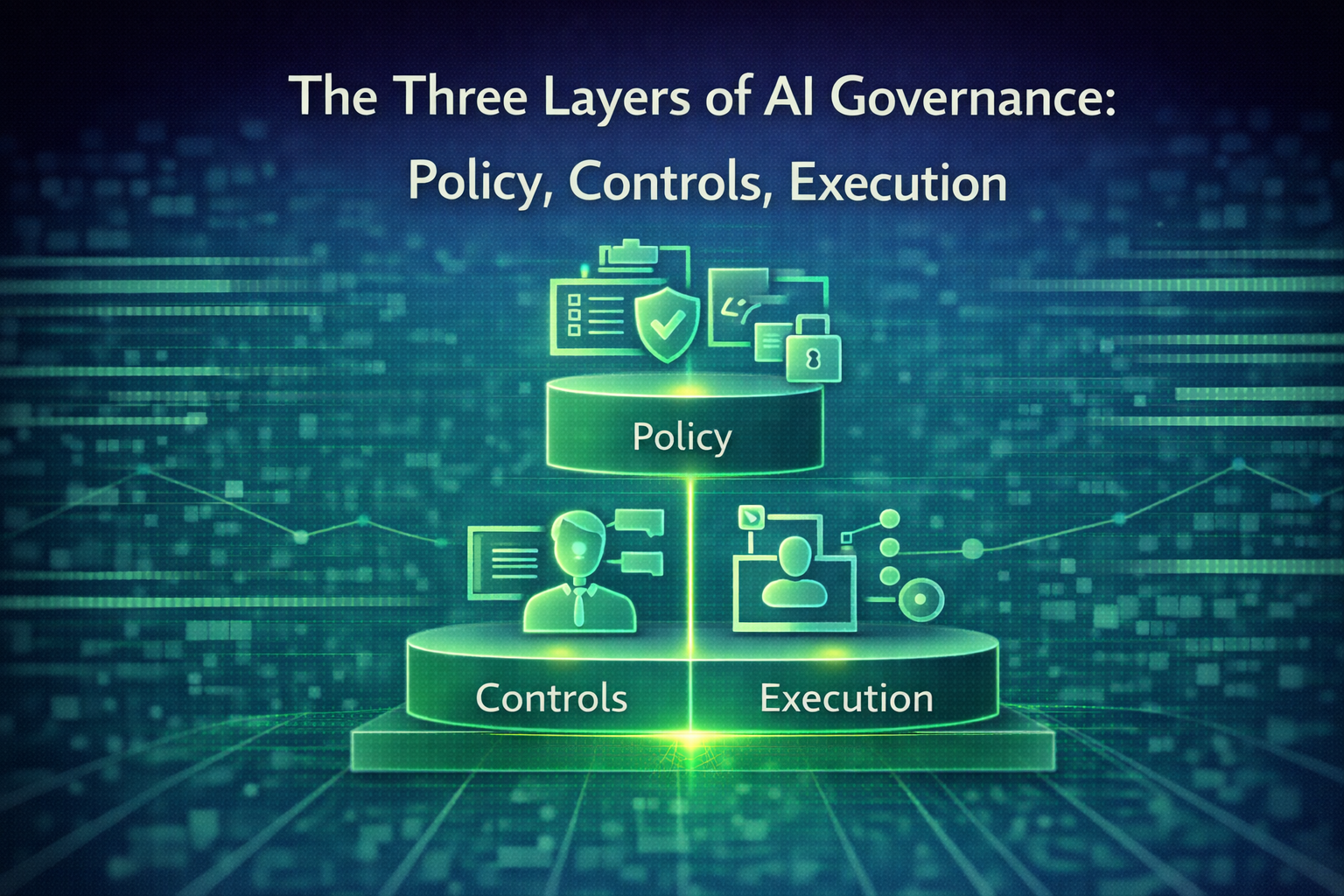
Read MoreWhy AI governance fails when it stays theoretical, and succeeds when it becomes operational.
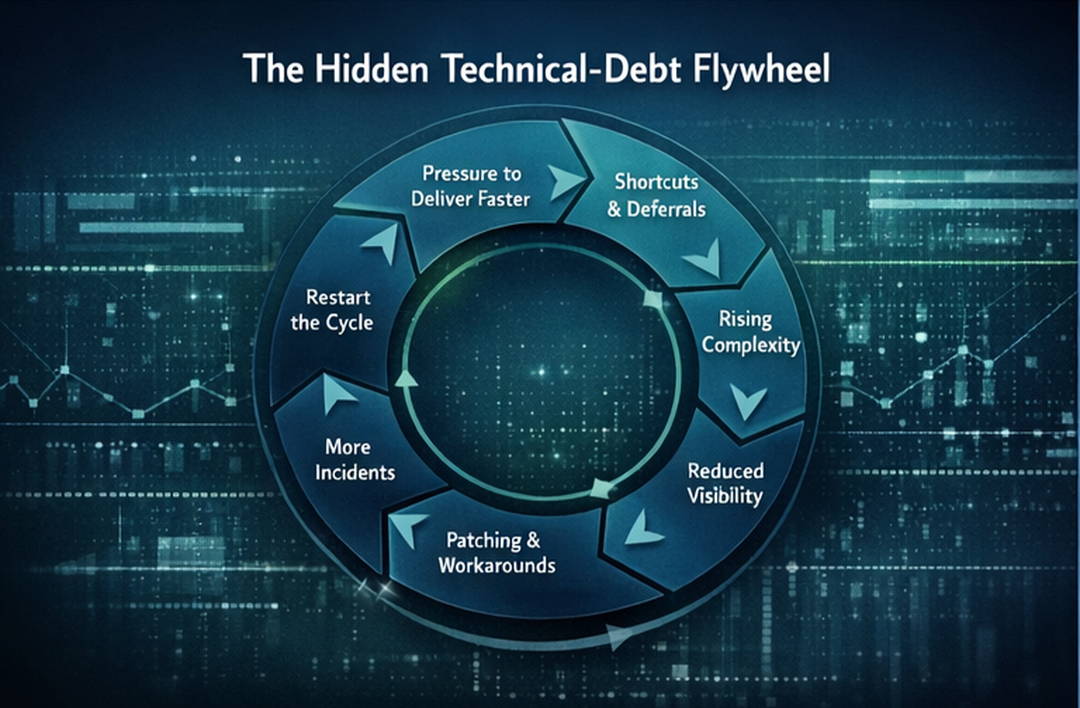
Read MoreThe organizations that win will not be those with the least debt. They will be those with the strongest ability to observe it, govern it, and prevent it from becoming systemic fragility.
That is the role of engineering intelligence. It turns hidden decay into operational control.
Read MoreWhy the next era of enterprise advantage will be built on resilience, not reinvention.
Read MoreWhy the modern enterprise must treat intelligence as infrastructure, not a feature.
Read MoreHow leaders create operational strength, governable intelligence, and durable advantage in 2026.
Read More