Organizations that combine AI-assisted augmentation with disciplined governance and strong operating models will be best positioned to sustain this evolution with confidence and trust.
Read More
Organizations that combine AI-assisted augmentation with disciplined governance and strong operating models will be best positioned to sustain this evolution with confidence and trust.
Read MoreWhy the next leap in enterprise capability requires new controls, not just new tools.
Read MoreThere are new frameworks for using teams of coding agents with little or no human supervision. Though most are not ready for daily use, the ideas and components within are worth understanding, and should drive organizations to do more using multiple agents with human supervision.
Read More2025 was the year software developers learned to be a technical team lead supervising one or two coding agents. 2026 is shaping up to be the year that developers employ several coding agents to accomplish tasks simultaneously, and perhaps without supervising them at all.
Read MoreWhy accountable oversight is the foundation of enterprise AI at scale.
Read MoreHow to prevent AI ambition from outrunning operational trust.
Read MoreWhy modern governance must be continuous, embedded, and measurable.
Read MoreWhy operational confidence requires measurement of risk, drift, and decision readiness.
Read MoreFor the CFO, the modernization decision is best framed as a cost avoidance and risk reduction strategy.
The question is not whether modernization is expensive. The question is whether non-modernization is affordable.
Read MoreWhy enterprise AI outcomes are determined by foundations, not models.
Read MoreEnterprises that attempt autonomy without observability and policy will scale risk. Enterprises that build the reliability stack deliberately will scale capability with control.
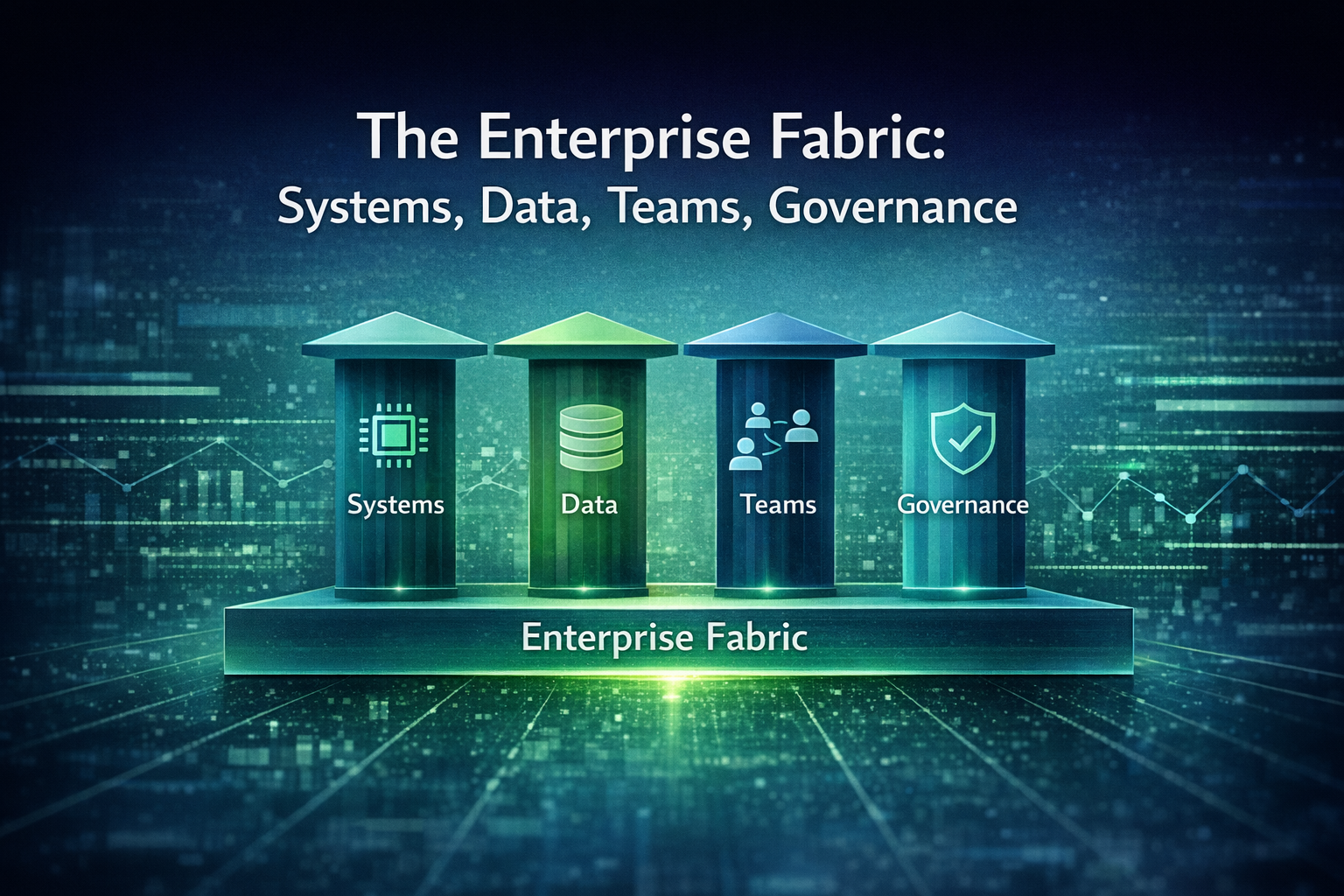
Read MoreWhy modernization succeeds only when the enterprise operates as one coherent system.
Read More