Using Multiple Coding Agents, Part 2: Welcome to Gas Town! by Ed Lyons
There are new frameworks for using teams of coding agents with little or no human supervision. Though most are not ready for daily use, the ideas and components within are worth understanding, and should drive organizations to do more using multiple agents with human supervision.
Read More
Using Multiple Coding Agents, Part I: The Human Maestro by Ed Lyons
2025 was the year software developers learned to be a technical team lead supervising one or two coding agents. 2026 is shaping up to be the year that developers employ several coding agents to accomplish tasks simultaneously, and perhaps without supervising them at all.
Read More
The Executive Case for Human-in-the-Loop Systems by Mark Hewitt
Why accountable oversight is the foundation of enterprise AI at scale.
Read More
Why Enterprise AI Must Be Grounded in Engineering Reality by Mark Hewitt
How to prevent AI ambition from outrunning operational trust.
Read More
From Visibility to Control: How Observability Changes Governance by Mark Hewitt
Why modern governance must be continuous, embedded, and measurable.
Read More
Metrics That Matter: What to Observe Beyond Uptime by Mark Hewitt
Why operational confidence requires measurement of risk, drift, and decision readiness.
Read More
The Cost of Non-Modernization: A CFO-Ready Explanation by Mark Hewitt
For the CFO, the modernization decision is best framed as a cost avoidance and risk reduction strategy.
The question is not whether modernization is expensive. The question is whether non-modernization is affordable.
Read More
Where AI Fails First: Low-Quality Data and Fragile Architectures by Mark Hewitt
Why enterprise AI outcomes are determined by foundations, not models.
Read More
The New Reliability Stack: Observability, Policy, Automation, Autonomy by Mark Hewitt
Enterprises that attempt autonomy without observability and policy will scale risk. Enterprises that build the reliability stack deliberately will scale capability with control.
Read More
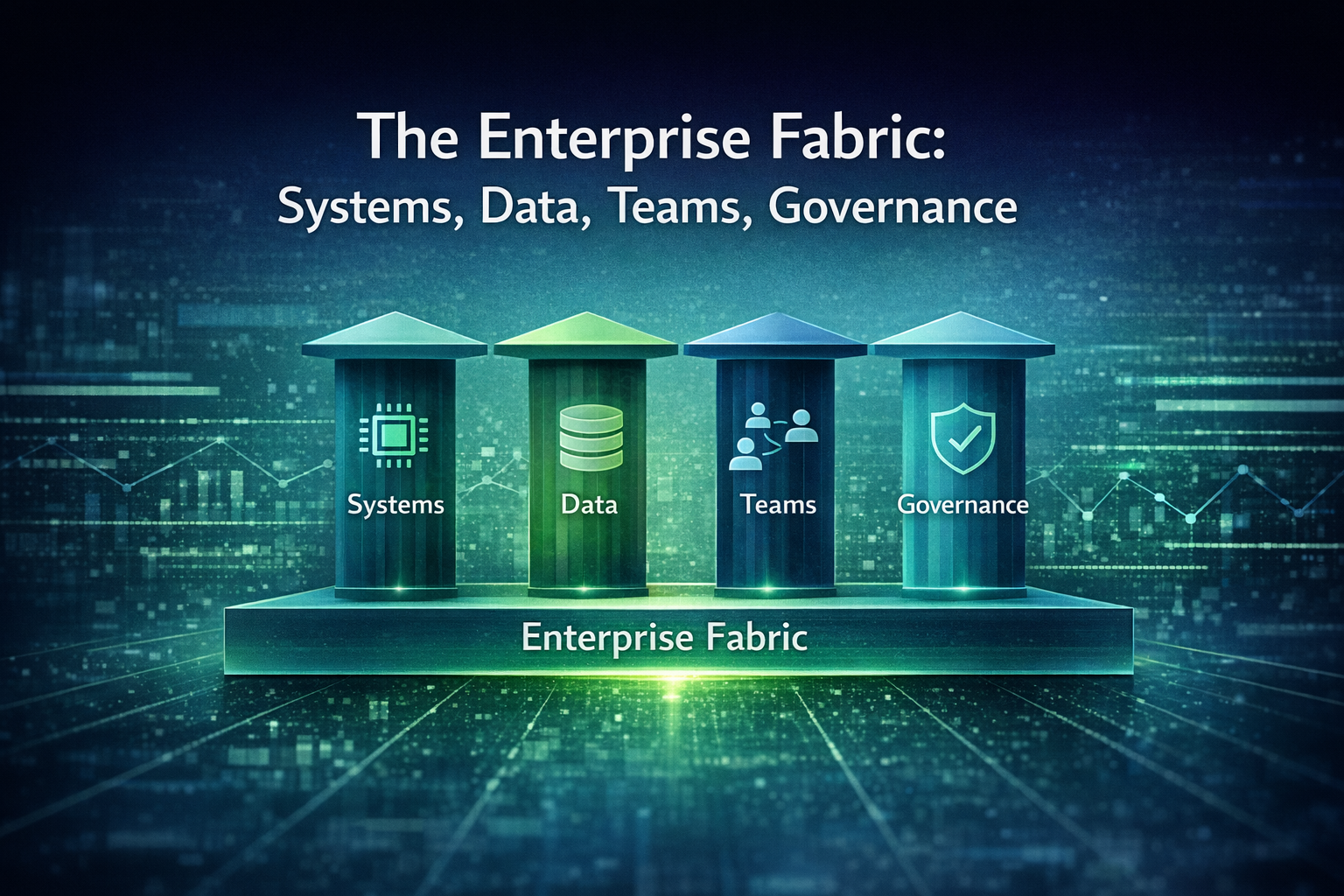
The Enterprise Fabric: Systems, Data, Teams, Governance by Mark Hewitt
Why modernization succeeds only when the enterprise operates as one coherent system.
Read More
Modernization Isn’t About Speed - It’s About Survivability by Mark Hewitt
In 2026, modernization should be treated as enterprise risk reduction. It should strengthen continuity, improve recoverability, increase observability, and embed governance into the operational fabric.
Enterprises that modernize for speed alone may become faster and still fragile.
Enterprises that modernize for survivability become durable, governable, and ready for scale. That is the modern competitive advantage.
Read More
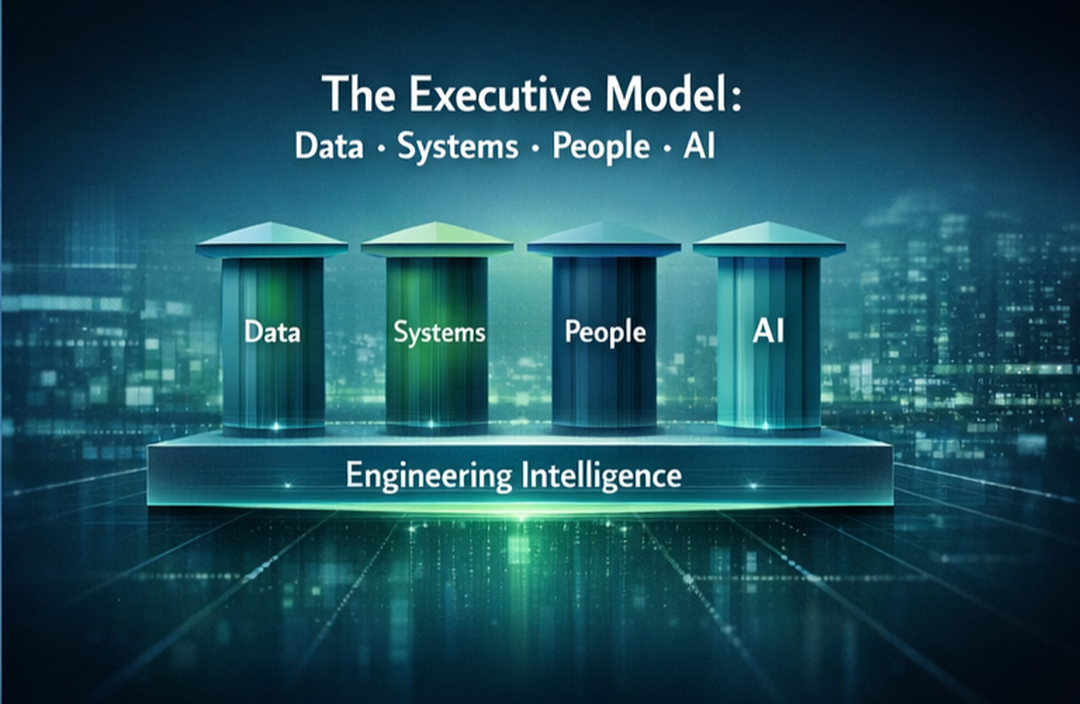
The Executive Model: Data, Systems, People, AI by Mark Hewitt
Why engineering intelligence is an operating model, not a technology initiative.
Read More