As AI systems mature and move deeper into core business operations, enterprise leaders face a strategic inflection point: how much autonomy should be given to machines, and under what conditions should human judgment remain in control?
Read More
As AI systems mature and move deeper into core business operations, enterprise leaders face a strategic inflection point: how much autonomy should be given to machines, and under what conditions should human judgment remain in control?
Read MoreThis post will walk with you through three ideas:
How agentic tooling works as the way you interact with these models.
How to think about the model that serves as the “coding brain.”
How to look at benchmarks and leaderboards so you can make a fair comparison.
Observability is not a compliance checkbox. It is the backbone of responsible AI. Enterprises that treat governance as a strategic advantage, rather than a constraint, will be best positioned to thrive in a world where AI is both powerful and scrutinized.
Read MoreThe use of multiple coding agents is difficult to supervise, but this technique can yield significant benefits to developers who learn when and how to use them.
Read MoreWhat does successful AI investment actually look like in 2025? The answer lies in a clear, disciplined framework that moves from efficiency to intelligence to transformation.
Read MoreBut Amazon’s new Kiro agent IDE is taking that much further. It coerces you into holding off on generating code until you have created a sequence of technical documents that feels a lot like… waterfall methodology.
Read MoreAs the primary architect of technology strategy, the CIO must champion AI with the same rigor applied to cybersecurity, data governance, and digital infrastructure. Elevate the conversation beyond proofs of concept. Insist on KPIs that reflect business value, not merely technical feasibility. And above all, ensure the board understands that AI success is a leadership imperative, not a technological curiosity.
Read MoreWhat was once a simple proposition—“Just use our API”—has evolved into a model where teams of strategists, engineers, and domain experts embed alongside clients to rewire their operations from the inside out. This is not merely about demonstrating the power of a large language model in a sandbox. It is about transforming business systems, processes, and outcomes at scale.
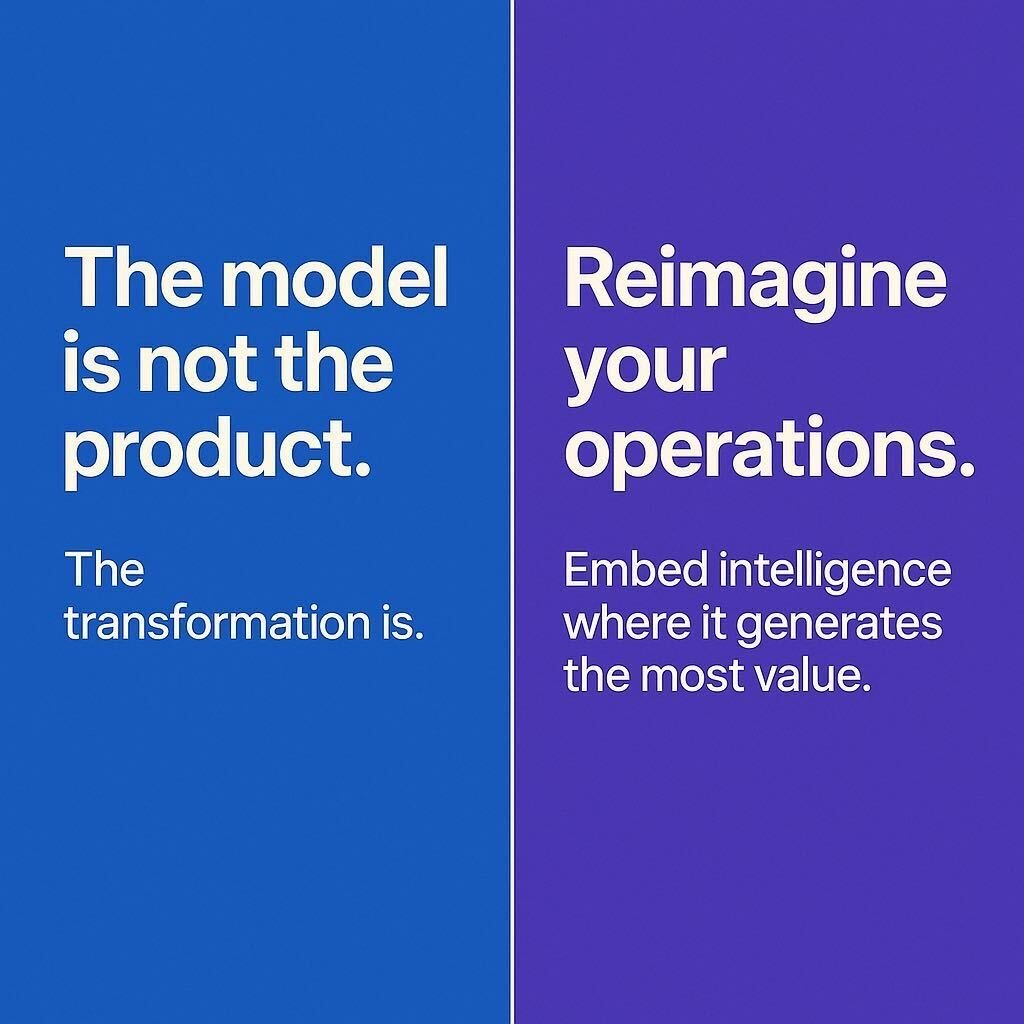
Read MoreYour competitors are not merely adding AI features—they are preparing to reinvent their businesses around them. The winners will be those who understand that the model is not the product. The transformation is.
Read MoreWith this open ecosystem approach, we empower enterprises to not just adopt AI, but to build and sustain their own AI capabilities, driving innovation and growth. Stay tuned as we embark on this transformative journey together!
Read MoreOnboarding engineers shouldn’t take days of manual setup and senior oversight. By leveraging tools like .NET Aspire, Winget config, and Visual Studio settings export, we reduced new hire setup time from 1–2 days to under 4 hours. Here’s how we automated consistency and accelerated productivity from day one.
Read MoreThis green paper offers a consulting perspective on how CEOs and executive digital leaders can responsibly and effectively position AI at the core of their modernization efforts. It explores how AI is empowering enterprises to operate with greater intelligence, agility, and foresight. With AI as a systemic capability woven into infrastructure, data platforms, applications, and decision-making processes, organizations can modernize in a way that is adaptive, scalable, and value-generating.
Read More