What Makes a Team a Team? by Jessica Vaughan
What Makes a Team a Team?
Why the ability to access one another’s expertise is becoming a defining capability for growing consultancies
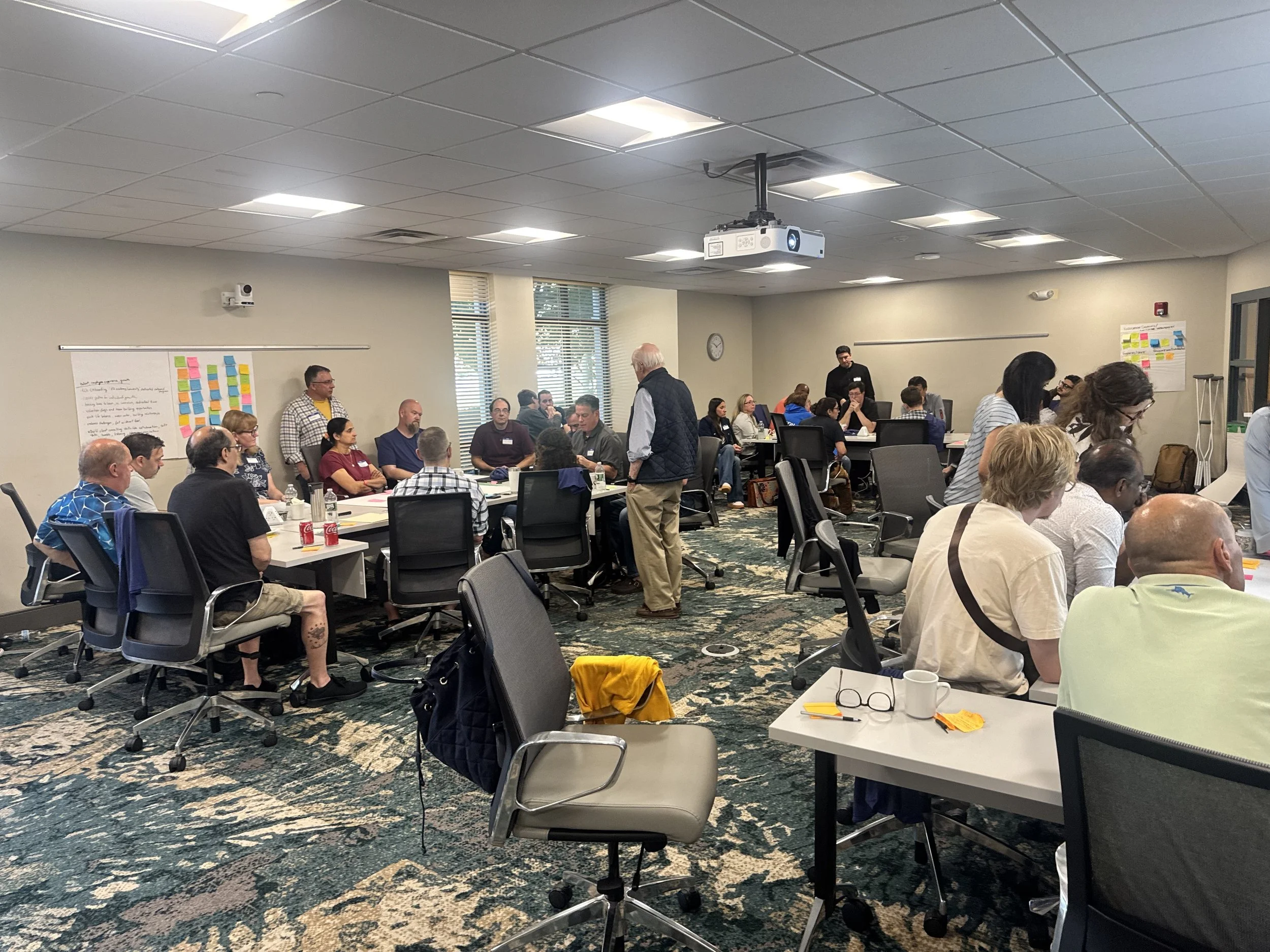
At our recent Strategic Planning Summit, I found myself watching the room as closely as the agenda. We are a fully remote digital consultancy, so bringing colleagues together from across the country creates a useful view of the organization in motion. People who work together every day were exchanging ideas with colleagues they rarely encounter. Newer employees were contributing alongside people with years of company and client experience. Conversations moved naturally from the topic at hand to a client challenge, a useful connection or a perspective that could strengthen the work.
What stayed with me was the ease with which people drew on one another’s experience. A conversation could begin with one challenge and quickly become stronger because someone else brought a relevant perspective, a lesson from another engagement or a connection that might otherwise have been missed.
Teamwork is an operating capability
In professional services, expertise is distributed by design. People develop deep knowledge through different clients, disciplines and experiences. The value of the firm, however, depends on our ability to make that expertise available beyond the engagement or individual where it originated.
For clients, the difference is meaningful. They are not hiring only the people named on a project plan. They are engaging the broader judgment and experience of the consultancy. The organization creates greater value when a consultant can reach across the company for a perspective, recognize that someone elsewhere has solved a similar problem or bring the right colleague into a conversation at the right moment.
This is where I think the conversation about teamwork becomes more useful. Teamwork is not simply a cultural aspiration. It is part of how a consultancy converts individual expertise into collective capability.
Access matters more than proximity
Remote work makes this especially visible. In an office, some knowledge exchange happens through proximity. People hear conversations, notice who others turn to for advice and build familiarity through repeated informal contact. In a remote environment, connection is more intentional.
In a remote organization, the measure of connection is not how frequently people interact. It is whether the organization makes its collective judgment available at the moment it can improve a decision, solve a problem or strengthen a client outcome.
Do people know where relevant expertise lives? Is it natural to ask for another perspective? Are experienced colleagues accessible? Can a newer employee contribute an insight without waiting to accumulate organizational tenure? Can something learned on one engagement improve the next one?
Those are practical questions, and the answers influence both employee experience and client outcomes.
Growth changes how connection happens
EQengineered is at an interesting point in its growth. In smaller organizations, familiarity carries a surprising amount of infrastructure. People know who knows what. They understand the history behind decisions. They know whom to call.
As an organization grows, that knowledge has to become easier to access without losing the human relationships that made it valuable in the first place. The opportunity is to add enough structure to help expertise travel while preserving the trust, empathy, transparency and collaboration our employees value.
This is not about formalizing every interaction. It is about creating the conditions for good judgment to move through the organization. Knowledge sharing, development, communication and connections across teams become part of the operating model, not separate people initiatives.
Learning and teaching should be fluid
One idea from our summit captured this well. We talked about creating more opportunities to “join to learn and join to teach.” I like the phrase because it recognizes that expertise and curiosity belong together. No matter how much experience we bring, there is always something to contribute and something to learn.
Experienced people should teach, and they should continue to learn. Newer colleagues should learn, and they should also be invited to contribute what they see. A healthy consultancy creates room for both. Curiosity and expertise reinforce one another.
That dynamic matters because the strongest answer rarely belongs to one person. It emerges when people are willing to contribute what they know and equally willing to seek what they do not.
The culture clients experience
Over time, I have become increasingly convinced that employee culture and client experience are not separate conversations. The habits inside an organization eventually show up in the work clients receive.
Our clients benefit when we draw on the experience and expertise that exists across the firm. Sometimes that means drawing on a colleague who has seen a similar challenge. Sometimes it means asking a question that changes the direction of the conversation. The point is not collaboration for its own sake. It is making the work stronger by drawing on the depth of experience across the firm.
That connection between culture and client experience is where the idea of team becomes strategically important. As EQengineered grows, each new colleague expands the expertise, perspective and judgment available to the firm. The value of growth comes from making that expanding capability increasingly useful across the organization.
That takes more than goodwill. It takes habits that allow knowledge to travel, relationships that make it easy to reach across teams and an environment where asking for perspective is understood as sound judgment. When those habits are part of how the company operates, growth adds depth without diluting connection.
The strongest teams make individual experience more valuable because it does not remain individual. What one person has learned can inform another colleague’s thinking, strengthen a different engagement and ultimately improve the work we deliver for our clients.